
Features, Care and How to Protect Your Investment
Natural stone countertops are often considered the centerpiece of a luxury kitchen or high-end space. Their elegance, durability, and unique visual appeal make them a preferred choice among homeowners, interior designers, and architects alike. Beyond aesthetics, these surfaces bring a sense of permanence and sophistication to any environment.
However, owning a natural stone countertop is not without responsibility. Each material comes with specific care requirements, and overlooking these can lead to permanent stains, scratches, or even structural damage. This is why understanding the nature of these materials, and how to protect them, becomes crucial if you want your investment to last for decades, not just a few years.
In this article, we will explore the most popular types of stone used for countertops, their individual characteristics, essential maintenance practices, and why advanced protection methods are quickly becoming a must-have for those who value both beauty and functionality.
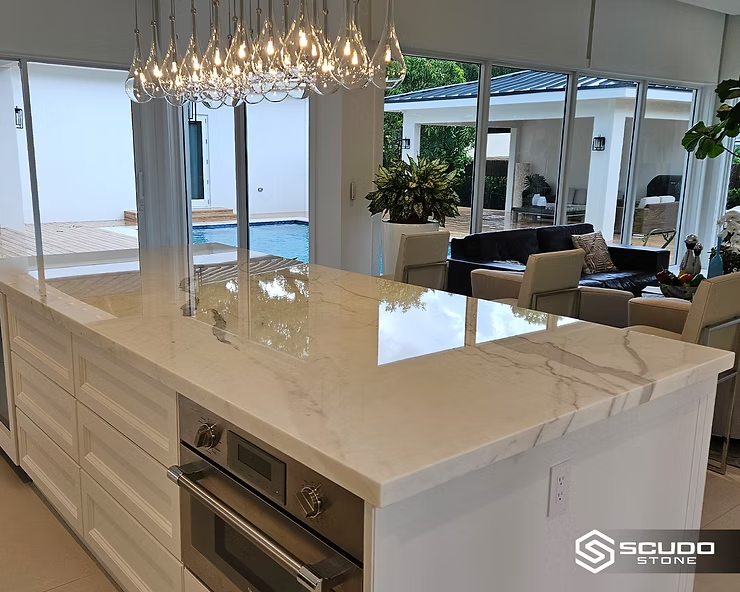
A stunning modern kitchen featuring a book-matched marble backsplash and matching countertops, seamlessly blending elegance and functionality. The natural veining creates a dramatic visual statement, while the sleek cabinetry and stainless-steel appliances complete the sophisticated design. This space highlights the timeless beauty of natural stone—and why proper protection is essential to preserve its pristine look for years to come.
A stunning modern kitchen featuring a book-matched marble backsplash and matching countertops, seamlessly blending elegance and functionality. The natural veining creates a dramatic visual statement, while the sleek cabinetry and stainless-steel appliances complete the sophisticated design. This space highlights the timeless beauty of natural stone—and why proper protection is essential to preserve its pristine look for years to come.
The Most Common Types of Stone for Countertops
1. Marble
Appearance: Recognized for its light tones and distinctive veining, marble has an unmatched natural beauty. No two slabs are identical, which means each countertop is a one-of-a-kind piece.
Advantages: Marble has long been associated with luxury and refinement. Its timeless appeal makes it a favorite in upscale kitchens, bathrooms, and even furniture.
Challenges: Despite its beauty, marble is a porous material, which makes it vulnerable to staining and etching. Everyday acidic substances like wine, citrus juice, and vinegar can dull its surface or leave permanent marks if not cleaned immediately.
2. Granite
Appearance: Granite comes in a broad spectrum of colors and patterns, from muted earth tones to bold, dramatic hues. Its granular texture adds depth and dimension to any design.
Advantages: Known for its durability, granite can withstand heavy use and high temperatures, making it ideal for busy kitchens. It is less prone to scratches and chips compared to other stones.
Challenges: Granite still requires maintenance. Periodic sealing is essential to prevent moisture penetration, which can lead to stains or harbor bacteria. Neglecting this step can compromise both hygiene and aesthetics.
3. Quartz (Engineered Stone)
Appearance: Quartz surfaces offer uniformity in color and pattern, with an extensive variety of tones and finishes to suit modern and minimalist designs.
Advantages: Unlike natural stones, quartz is non-porous, meaning it resists staining without the need for sealing. It’s also highly durable, making it a practical choice for homeowners who want style with minimal upkeep.
Challenges: While quartz is strong, it is not invincible. Extreme heat can cause discoloration or surface damage, and because it’s engineered, it lacks the uniqueness of natural stone, which some homeowners value.
4. Travertine and Other Stones
Appearance: Travertine and similar stones bring unique textures and natural warmth to interiors, making them ideal for decorative or specialty applications.
Challenges: These materials tend to be softer and more porous than marble or granite, making them highly susceptible to moisture damage, etching, and staining. They require consistent maintenance and are often better suited for low-traffic areas.
Essential Care for Stone Surfaces
Owning a marble, granite, or quartz countertop is like having a functional work of art in your home. Its beauty can elevate the entire space, but only if you commit to proper care. Here are some critical practices to keep your stone surfaces in top condition:
- Immediate Spill Cleanup: Acids and pigments can permanently damage stone surfaces if left to sit. Always wipe spills promptly, especially those from wine, coffee, citrus juices, or vinegar.
- Use Gentle Cleaners: Stick to pH-neutral cleaners and soft cloths. Harsh chemicals like bleach or ammonia can degrade protective layers and cause discoloration. Abrasive pads or powders should also be avoided as they can scratch the surface.
- Thermal Protection: Direct contact with hot cookware can cause thermal shock, leading to cracks or internal damage. Always use trivets or heat pads to protect your countertop from sudden temperature changes.
- Cutting Boards are a Must: Chopping directly on stone can dull your knives and leave marks on the surface. Use a cutting board every time for both hygiene and preservation.
- Periodic Professional Maintenance: Natural stones such as marble and granite often require periodic sealing to maintain their resistance to stains and moisture. Skipping this step can shorten the life and diminish the beauty of your countertop.
Consistent care is the difference between a surface that stays pristine for decades and one that deteriorates within a few years.
Advanced Protection: Why Aliphatic Polyurethane Films Are a Game-Changer
Traditional solutions like liquid sealants and sprays have been the go-to method for years. However, they come with clear limitations: they require frequent reapplications, release volatile chemicals during use, and often fail to provide long-term durability.
Modern technology has introduced aliphatic polyurethane films as a revolutionary alternative in stone surface protection. Here’s why they are considered a superior solution:
- Crystal-Clear Finish: These films maintain full transparency without yellowing or discoloring, even with prolonged sunlight exposure.
- Robust Protection: They form an invisible yet highly durable barrier against acids, oils, water, and physical abrasions.
- Low Maintenance: Once applied, these films eliminate the need for constant reapplication or professional resealing.
- Preserves Original Beauty: They do not alter the stone’s color, texture, or natural feel.
- Safe and Eco-Friendly: Free from toxic emissions and harmful fumes during installation and throughout their lifecycle.
Investing in advanced protection is not about luxury, it’s about smart ownership. By safeguarding your stone surfaces with cutting-edge solutions, you ensure they retain their elegance and functionality for years without the stress of accidental damage or costly repairs.
Final Thoughts
Your countertop is more than a work surface, it’s a design statement, an investment, and often the heart of your kitchen. The question is: Do you want to live in constant worry about stains and scratches, or enjoy peace of mind knowing your stone is built to last?
With proper care and advanced protection, your countertop will continue to impress, not just today, but for years to come.

