
Understanding the critical difference between aliphatic and aromatic polyurethane films and why it matters for your marble, granite, and quartz surfaces.
If you’re researching countertop protection film, you’ve probably encountered two terms: aliphatic polyurethane and aromatic polyurethane. While they may sound similar, the difference between these two materials can determine whether your marble countertop stays pristine for years or turns yellow within months.
In this comprehensive guide, we’ll explain exactly what separates aliphatic from aromatic polyurethane, why this distinction matters for stone surface protection, and how to make the right choice for your home or commercial space.
What Is Polyurethane Protection Film?
Polyurethane protection film (often called PPF or clear protective film) is a transparent, self-adhesive layer applied to surfaces to shield them from scratches, stains, etching, and daily wear. Originally developed for automotive paint protection, this technology has evolved to protect high-value surfaces including marble countertops, granite islands, quartz surfaces, and luxury retail displays.
But not all polyurethane films are created equal. The chemical composition of the film, specifically whether it uses aliphatic or aromatic isocyanates, dramatically affects its performance, durability, and long-term appearance.
Aliphatic vs Aromatic Polyurethane: The Key Differences
What Is Aromatic Polyurethane?
Aromatic polyurethane is manufactured using aromatic isocyanates (typically TDI or MDI). These films are:
- Less expensive to produce
- Widely available
- Prone to yellowing when exposed to UV light
- Less chemically stable over time
Aromatic polyurethane films may look identical to aliphatic films when first applied. However, within 6-12 months of UV exposure, they begin to yellow and degrade. This makes them unsuitable for countertops near windows, outdoor applications, or any surface exposed to natural light.
Common applications: Temporary protection during shipping, low-cost automotive films, industrial applications where appearance doesn’t matter.
What Is Aliphatic Polyurethane?
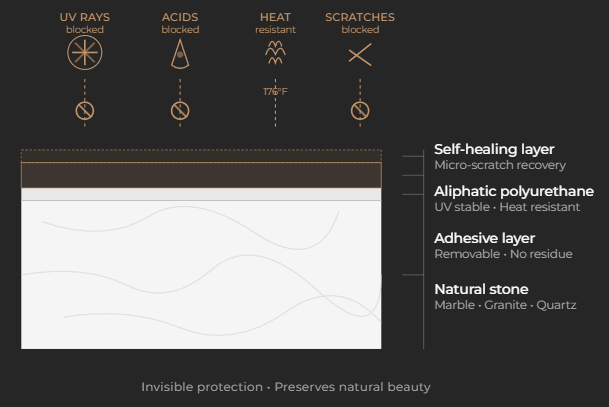
Aliphatic polyurethane is manufactured using aliphatic isocyanates (typically HDI or IPDI). These premium films offer:
- Complete UV resistance, no yellowing, ever
- Superior chemical stability
- Self-healing properties for micro-scratches
- Long-term clarity and gloss retention
- Higher heat resistance
- Better flexibility and durability
Aliphatic polyurethane films maintain their crystal-clear appearance for years, even under direct sunlight. This makes them the only suitable choice for protecting valuable stone surfaces where aesthetics matter.
Common applications: Luxury automotive PPF, aerospace, high-end stone countertop protection, museum display cases, luxury retail environments.
Side-by-Side Comparison: Aliphatic vs Aromatic Polyurethane
| Property | Aromatic Polyurethane | Aliphatic Polyurethane |
| UV Resistance | Poor-yellows over time | Excellent-no yellowing |
| Heat Resistance | Up to 120°F (49°C) | Up to 176°F (80°C) |
| Self-Healing | Limited or none | Yes-micro-scratches heal |
| Chemical Resistance | Moderate | Superior |
| Clarity Retention | Degrades within months | Maintains clarity for years |
| Cost | Lower | Higher |
| Lifespan | 1-3 years | 5-10+ years |
| Best For | Temporary/industrial use | Premium surfaces, stone countertops |
Protection System
Why Aliphatic Polyurethane Is Essential for Stone Countertops
1. UV Resistance Prevents Yellowing
Marble, granite, and quartz countertops are often installed near windows or under kitchen lighting that emits UV rays. Aromatic polyurethane films will yellow in these conditions, creating an unsightly tint that defeats the purpose of protection.
Aliphatic polyurethane contains UV stabilizers that block harmful wavelengths, ensuring the film remains crystal clear throughout its lifespan. Your white Calacatta marble stays white, not cream or yellow.
2. Heat Resistance Protects Against Kitchen Accidents
Countertops face daily thermal stress from hot pans, coffee makers, and cooking activities. Aliphatic polyurethane withstands temperatures up to 176°F (80°C) without losing adhesion or clarity.
Aromatic films can soften, bubble, or permanently deform at much lower temperatures, leaving your stone vulnerable at the moment it needs protection most.
3. Self-Healing Technology Erases Minor Damage
Premium aliphatic polyurethane films feature self-healing top coats. When minor scratches occur (from sliding dishes, keys, or utensils), the film’s molecular structure reforms when exposed to heat, even the warmth of your hand or sunlight.
This self-healing property keeps the surface looking flawless without requiring replacement or repair.
4. Chemical Resistance Prevents Etching
Stone countertops are vulnerable to acidic substances: lemon juice, wine, vinegar, tomato sauce, and even some cleaning products. These acids etch into unprotected stone, leaving permanent dull spots.
Aliphatic polyurethane creates an impermeable barrier that prevents acids from reaching the stone surface. Spills that would permanently damage bare marble simply wipe away.
5. Long-Term Value
While aliphatic polyurethane films cost more upfront, their 5-10+ year lifespan delivers superior value compared to aromatic films that need replacement every 1-3 years. When protecting a $15,000+ marble countertop, the premium for aliphatic technology is a wise investment.
How to Identify Aliphatic vs Aromatic Polyurethane
Ask These Questions:
- “Is this film aliphatic or aromatic polyurethane?” – If they can’t answer clearly, be cautious.
- “What is the UV resistance rating?” – Aliphatic films will have documented UV stability testing.
- “Does it have self-healing properties?” – True self-healing requires aliphatic chemistry.
- “What is the heat resistance?” – Below 150°F suggests aromatic formulation.
- “What is the expected lifespan?” – Claims under 5 years typically indicate aromatic.
Red Flags:
- Unusually low pricing (aliphatic costs more to produce)
- No technical specifications available
- Vague claims like “UV resistant” without documentation
- No warranty or very short warranty period
Why Many Competitors Use Aromatic Polyurethane
The answer is simple: cost.
Aromatic polyurethane is significantly cheaper to manufacture. Some companies prioritize margin over performance, knowing that yellowing won’t appear until months after installation, long after the customer has paid.
Others simply don’t understand the chemistry and purchase whatever film their supplier offers at the lowest price.
When evaluating countertop protection services, always ask specifically about aliphatic vs aromatic formulation. Your marble, granite, or quartz surface deserves protection that lasts.
The Scudo Stone Difference: Exclusively Aliphatic Polyurethane
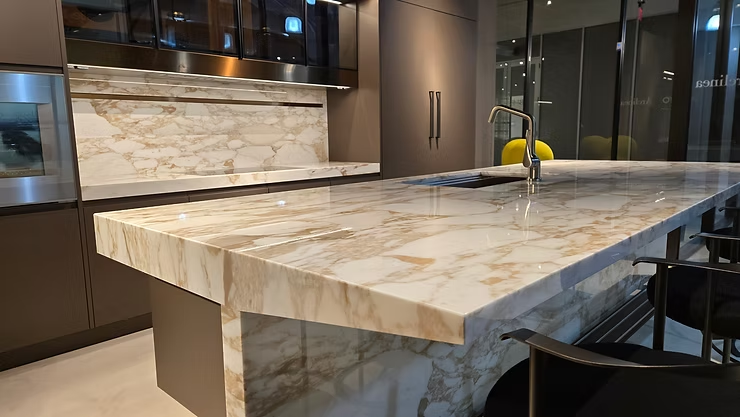
At Scudo Stone, we use exclusively aliphatic polyurethane film for every installation. We made this choice deliberately because our clients invest in premium surfaces, Calacatta marble, exotic quartzite, designer quartz, and they deserve protection that matches that investment.
Our Aliphatic Polyurethane Film Offers:
- UV Resistance: Prevents yellowing, even in sun-drenched Miami kitchens
- Heat Endurance: Tested to 176°F (80°C) without degradation
- Self-Healing Surface: Micro-scratches disappear with warmth
- 100% Humidity Protection: Essential for Florida’s coastal climate
- Chemical Resistance: Guards against acids, oils, and household cleaners
- Food-Safe Certification: Non-toxic, odor-free, safe for food contact
- Crystal-Clear Finish: Preserves (and often enhances) your stone’s natural beauty
- Available in High Gloss and Matte: Match your design aesthetic perfectly
Professional Installation
The best film in the world means nothing if poorly installed. Our trained technicians ensure every edge and corner is meticulously covered, providing complete protection without visible seams or lifting edges.
Conclusion: Choose Aliphatic for Surfaces That Matter
When protecting valuable stone countertops, the choice between aliphatic and aromatic polyurethane isn’t a minor technical detail, it’s the difference between lasting protection and disappointing results.
Aromatic polyurethane may save money initially, but yellowing, reduced durability, and shorter lifespan make it unsuitable for premium surfaces.
Aliphatic polyurethane delivers the UV resistance, self-healing properties, and long-term clarity that marble, granite, and quartz countertops require.
If you’re investing in countertop protection, insist on aliphatic polyurethane. Your surfaces and your investment, deserve nothing less.

